

Emergency tree removal in Partridge Creek is for immediate danger. Call when a tree or limb can fall soon, or when it blocks safe access. Fast response limits property damage and safety risk.
Partridge Creek in Clinton Township has mature trees and tight residential spacing. Many trees sit close to roofs, garages, and driveways. After wind or heavy rain, those trees can shift fast.
Homeowners ask this question all the time. When should I call emergency tree services?
Call when a tree creates an immediate threat to people, property, or safe access.
What counts as a tree emergency
A tree emergency involves sudden risk. It can start during a storm. It can also start on a calm day.
These situations often qualify:
- A tree rests on a roof, garage, or porch
- A large limb hangs over a driveway or walkway
- A trunk splits or shows a fresh crack
- The ground lifts near the base
- A tree blocks a driveway or sidewalk
If a tree can fail without warning, treat it as urgent.
Trees touching or resting on a home
A tree in contact with a structure needs fast action. Even light pressure can damage shingles and gutters. More pressure can break framing.
Do not climb onto a roof to inspect. Do not pull on the tree. Movement can shift weight and cause a second impact.
Emergency crews remove weight in small sections. They control each cut and lower wood away from the house.
Hanging limbs and broken tops
Hanging limbs create one of the most dangerous situations. A broken branch can drop with no notice. Wind and vibration can dislodge it.
Look for a limb that bends down and stays pinned. Look for a branch that sits in another branch. Look for broken tops in tall trees.
If the limb hangs over a driveway or entry path, block the area. Keep people and pets away. Call emergency tree services.
Sudden leaning and soil movement
Lean can change after heavy rain. Wet soil loses holding strength. Roots can shift under load.
A stable lean that has not changed often stays consistent. A new lean signals risk.
Check for these signs near the base:
- Fresh soil cracks
- Lifted turf on one side
- Exposed roots on one side
- A gap forming between trunk and soil
If the tree stands within reach of a home or vehicle area, treat it as urgent.
Storm damage that does not show right away
Storm damage often hides. Branch unions can crack but stay attached. A trunk seam can open and close with wind.
After storms, walk the yard and look up. Keep distance from damaged trees. Focus on visible changes.
Key signs include:
- Fresh cracks in bark
- New deadwood in the crown
- Branches that dropped with clean splinters
- A canopy that looks lopsided after wind
These signs can turn into failure during the next weather event.
Fallen trees and blocked access
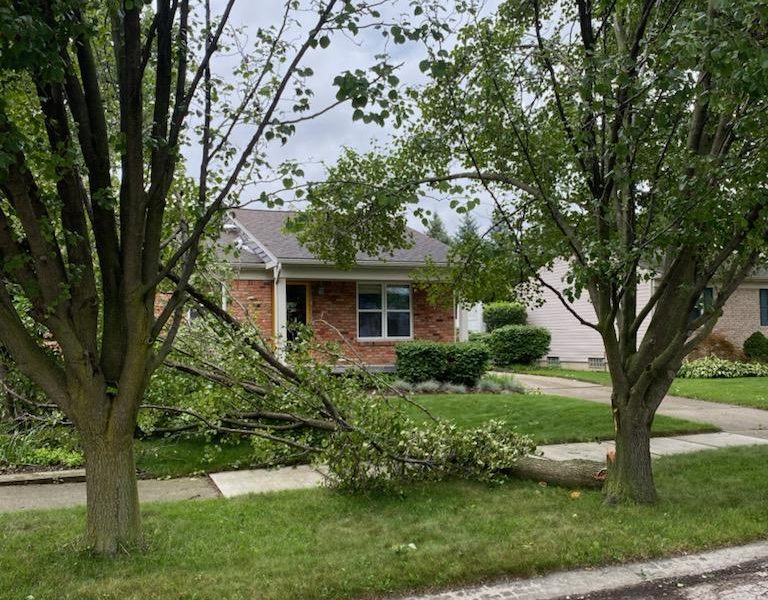
A fallen tree can become urgent even without house contact.
A blocked driveway traps vehicles. A blocked sidewalk forces people into the street. A fallen tree across a shared access lane affects neighbors.
If access is blocked, emergency removal restores safe movement. It also reduces risk from shifting logs and hung up branches.
Trees near utility lines
Trees near power lines require strict caution. Do not touch branches that contact lines. Electricity can travel through wet wood.
Keep people back. Keep pets back. Report line contact to utility services.
Tree crews follow safe coordination when lines are involved. This keeps the site controlled and reduces exposure.
What is not an emergency
Some tree issues allow scheduled service.
Small dead branches high in the canopy can wait. Minor leaf drop does not signal immediate failure. A fence line scrape from a small limb is not urgent.
The dividing line is immediate danger. If the tree can fall soon and hit a target, treat it as urgent.
What to do before help arrives
Take simple steps that reduce risk.
Keep people away from the hazard area. Keep cars out of the fall zone. Use cones, rope, or a visible marker if needed.
Do not cut large limbs yourself. Do not climb ladders near damaged trees. Do not stand under hung branches.
If it is safe, take photos from a distance. This helps document the condition before work begins.
How emergency tree removal works in tight neighborhoods
Partridge Creek lots often have limited drop space. Controlled removal matters.
Crews assess the tree and the target zones. They remove weight in smaller sections. They use ropes and rigging when needed.
This method protects roofs, fences, and landscaping. It also reduces secondary damage during removal.
Why early emergency calls matter
Waiting adds risk.
A cracked limb can drop overnight. A split trunk can open further with small gusts. A leaning tree can fail after one more rain.
Early emergency response stabilizes the hazard. It reduces the chance of larger damage later.
How Bucket Baby Tree Service handles emergency tree removal
Bucket Baby Tree Service provides emergency tree removal in Partridge Creek and across Clinton Township. Crews start with a safety review and a clear plan.
They control each cut and manage weight direction. They focus on protecting nearby structures and access routes.
This approach keeps emergency work disciplined and safe.
FAQs
When should I call emergency tree services?
Call when a tree or limb can fall soon and hit a target. Targets include homes, vehicles, sidewalks, and play areas. Block the area and treat it as urgent.
Is a fallen tree always an emergency?
A fallen tree is urgent if it blocks access or rests on a structure. A tree that falls in open yard space may allow scheduled removal. Risk still exists if the tree is hung up or under tension.
What if a tree leans after heavy rain?
New lean after rain can signal root movement. Check for soil cracking and lifted turf near the base. If the tree stands near a home or driveway, call emergency tree services.
Should I cut a broken limb myself?
Do not cut large or hung limbs without training and equipment. A limb can shift and trap tools, ladders, or people. Emergency crews remove limbs in controlled sections.
Do storm damaged trees always need removal?
Not always. Some trees only need selective pruning and weight reduction. Trees with split trunks, major cracks, or root plate movement often require removal.
What should I avoid doing during a tree emergency?
Avoid climbing ladders near damaged trees. Avoid pulling on limbs or pushing on trunks. Avoid parking under damaged canopies until the hazard is cleared.