

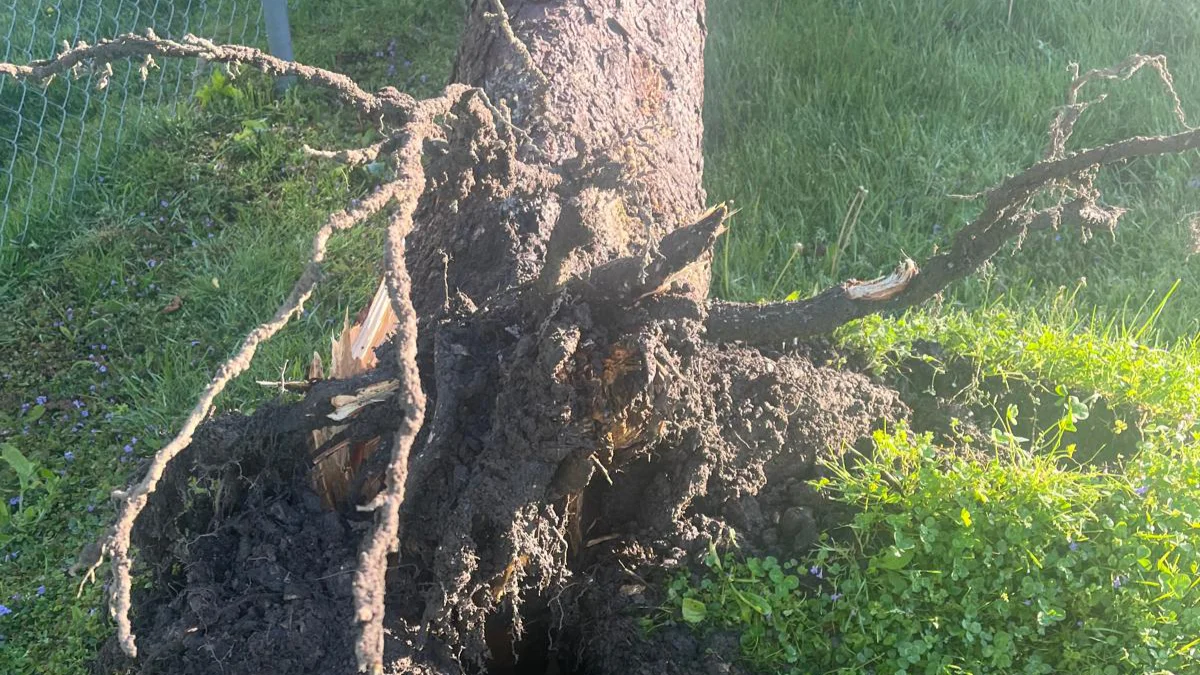
You’ve noticed tree roots in your yard creeping up through the grass, and now you’re wondering if something is wrong. It’s a pretty common concern for homeowners across Macomb County, and the good news is that it’s usually not as alarming as it looks. But ignoring it completely isn’t the best move either, so let’s talk through what’s actually going on and what you can do about it.
Why Tree Roots Grow Near the Surface
Tree roots grow near the surface because that’s where the good stuff is. The top 6 to 18 inches of soil hold most of the oxygen, water, and nutrients that a tree needs to survive. Roots don’t go deep looking for resources unless they have to. They follow the path of least resistance, and in most yards, that path runs shallow.
Here’s the thing about Michigan soils specifically. Macomb County has a lot of clay-heavy ground, especially in older neighborhoods in Clinton Township and parts of St. Clair Shores. Clay soil compacts easily, and compacted soil doesn’t have much air in it. When roots can’t push through dense clay, they grow sideways near the surface where the soil is a little looser and oxygen is still available.
And then there’s Michigan’s freeze-thaw cycle. Every winter, the ground freezes and expands. Every spring, it thaws and settles. Over years, that constant movement gradually pushes roots upward, almost like the ground is slowly rejecting them. A root that was two inches underground in 2005 might be sitting right at the surface today. That’s not a sign of a sick tree. That’s just physics.
The Role of Erosion and Soil Moisture
Soil erosion is one of the biggest reasons surface roots seem to “appear” suddenly. The roots were always there. But rain, foot traffic, and runoff gradually wash away the thin layer of topsoil that was covering them. Once that protective layer is gone, there they are.
Michigan’s wet springs make this worse. Harrison Township and other communities near Lake St. Clair deal with higher soil moisture levels throughout the spring, which softens the topsoil and makes it easier for rain and runoff to carry it away. Then the dry summers hit, the soil contracts, and any gaps or shallow spots become even more obvious. That cycle of wet and dry, repeated year after year, really does move things around.
Irrigation patterns play a role too. If you water your lawn in the same spots consistently, roots will grow toward that moisture. They’re opportunistic like that. A drip line, a downspout that empties in the same area every rain, or even a low spot in the yard where water pools can all pull roots toward the surface over time.
Which Trees Are Most Likely to Develop Surface Roots
Certain tree species are much more prone to surface roots than others, and some of the most common trees in southeast Michigan are on that list.
Silver maple is probably the biggest offender in this part of the state. It’s everywhere in Macomb County, planted in neighborhoods all across Clinton Township, St. Clair Shores, and Harrison Township going back decades when builders and landscapers loved them for their fast growth. Norway maple and American beech are also well-known surface rooters. Willows and cottonwoods, which you’ll find near wet areas and drainage corridors throughout the county, are the same way.
(If you’re not sure what kind of tree you have, a quick photo search or a call to a local arborist can usually nail it down pretty fast.) The thing is, many of these trees were planted 30, 40, or even 50 years ago in yards that weren’t designed with their mature root spread in mind. A silver maple planted close to a driveway or sidewalk back in the 1970s is going to make its presence known eventually. That’s not a failure. That’s just the tree doing what silver maples do.
Is It Actually a Problem?
Surface roots by themselves are usually not a danger to the tree. They’re doing their job, pulling in water and nutrients, anchoring the tree. The tree is not dying just because its roots are visible. That’s one of the biggest misconceptions we hear from homeowners, and it’s worth saying clearly.
That said, surface roots can create real practical problems. They’re a tripping hazard, especially for kids and older adults. They make mowing a frustrating obstacle course. According to research cited by Michigan State University Extension, root damage from lawn mowers and string trimmers is one of the leading causes of tree decline in residential landscapes. When you clip a root repeatedly with a mower blade or nick the bark with a trimmer, you’re opening a wound that insects and fungal disease can move right into.
Surface roots can also lift hardscape over time. A driveway crack in a Harrison Township neighborhood, a sidewalk panel in St. Clair Shores that’s slowly tilting, a patio in Clinton Township that’s starting to buckle. These are all things that can happen when a mature tree’s roots run under concrete or pavers for years. It’s slow, but it adds up.
What You Should NOT Do
Do not cut surface roots on your own. This one matters a lot. Removing more than 20 to 25 percent of a tree’s root system can destabilize it or kill it outright. Roots aren’t just feeding the tree. They’re holding it in the ground. Cut too many and you’ve got a structurally compromised tree that could come down in the next big storm.
Don’t cover the roots with thick layers of soil either. It feels like the obvious fix, but roots need oxygen. Adding more than 2 to 3 inches of soil over the root zone can suffocate them and cause the tree to go into decline. It might take a season or two to show, but the damage is real. And don’t keep running your mower over exposed roots. Every pass chips away at the bark, and that bark is the tree’s skin. Damage it repeatedly and you’re inviting trouble.
You can learn more about general tree care best practices from Michigan State University Extension at canr.msu.edu, which has solid, research-based guidance on root management and tree health in Michigan landscapes.
What You CAN Do About Surface Roots
The most practical fix for most homeowners is mulch. A 2 to 3 inch layer of wood chip mulch spread over the root zone protects the roots, improves moisture retention, and makes the area look intentional and tidy. Keep the mulch away from the base of the trunk by a few inches so you’re not trapping moisture against the bark. That’s the one detail most people miss.
Even better, consider turning the root zone into a mulched landscape bed around the tree. Plant some shade-tolerant ground cover or low perennials, put down a clean border, and suddenly that awkward rooty patch becomes a nice design feature. It completely eliminates the mowing conflict because you’re not mowing there anymore.
If soil compaction is contributing to the problem, core aeration can help over time. It opens up the soil, improves drainage, and gives roots a little more room to grow downward. For situations where roots are lifting a driveway, sidewalk, or patio, a certified arborist can assess whether careful root pruning is an option. This is not a DIY job. Done wrong, it can harm the tree. Done right by someone who knows what they’re doing, it can solve the problem without sacrificing the tree. You can explore tree care and maintenance services from Bucket Baby Tree Service in Macomb County to get professional eyes on your specific situation.
When to Call a Professional
Call a professional if roots are lifting your driveway, sidewalk, or anything near your foundation. That’s not just an aesthetic issue. It’s a structural one, and the longer you wait, the more expensive the fix tends to get.
Also reach out if you notice roots that look damaged, discolored, or soft and rotting. Healthy roots should look firm and woody. Rotting roots are a sign of a deeper problem that needs diagnosis. And if your tree is leaning more than it used to, or if the soil around the base is heaving or cracking, that’s a stability concern that should be looked at right away. You can check out professional tree trimming and pruning in Clinton Township and St. Clair Shores as a starting point, or request a full tree health assessment.
Don’t wait on stability issues. A tree that’s lost significant root integrity can come down without much warning, especially during one of our Michigan thunderstorm seasons. Getting an expert opinion early is always the smarter call.
Frequently Asked Questions
Are surface tree roots a sign my tree is dying?
Not at all, and honestly this is one of the questions we get a lot at Bucket Baby Tree Service from homeowners all over Macomb County. Surface roots are most often just a sign that the tree is doing what trees do, especially in our clay-heavy Michigan soils where roots can’t always go deep. The tree is healthy and looking for oxygen and nutrients near the top of the soil profile. Now, if the roots look rotted, discolored, or mushy, that’s a different conversation and worth getting checked. But visible roots alone? That’s usually not a red flag.
Can I put dirt over tree roots to even out my yard?
You can, but you’ve got to be careful about how much. At Bucket Baby Tree Service, we advise homeowners throughout Clinton Township, St. Clair Shores, and the rest of Macomb County to stick to 2 to 3 inches max over the root zone. More than that and you start cutting off the oxygen supply to the roots, which can cause the tree to go into slow decline over the following seasons. It doesn’t kill the tree overnight, so people often don’t connect the dots. A thin layer of topsoil or wood chip mulch is fine. Piling on six inches of fill dirt to smooth things out is not.
Why do silver maples always seem to have the worst surface root problems?
Silver maples are just built that way, and they’re absolutely everywhere in Macomb County neighborhoods. They grow fast, they love our Michigan climate, and their root systems are aggressive and wide-spreading by nature. At Bucket Baby Tree Service, we see this constantly in older Clinton Township and St. Clair Shores neighborhoods where silver maples were planted 40 or 50 years ago in spots that didn’t account for how big the root system would eventually get. Add in our clay soils that compact easily, and those roots have nowhere to go but sideways and up. It’s not a disease or a defect. It’s just what silver maples do.
Is it safe to remove surface roots myself to fix a lifted sidewalk?
We’d really encourage you not to try this one on your own. Root pruning is something our team at Bucket Baby Tree Service approaches carefully even with professional training, because cutting the wrong roots can destabilize a tree or cause it to decline. The general rule in arboriculture is that removing more than 20 to 25 percent of a tree’s root system puts the tree at serious risk. If you’ve got a root lifting a sidewalk or driveway in Harrison Township or anywhere else in Macomb County, the right move is to get a certified arborist to take a look first. We can assess which roots are safe to address and which ones you absolutely need to leave alone.
How do I stop roots from coming back after I’ve dealt with them?
Here’s the honest answer: you can manage surface roots, but you can’t always stop them permanently. The tree is going to keep growing. At Bucket Baby Tree Service, what we usually recommend for homeowners throughout Macomb County is to convert the root zone into a mulched bed rather than trying to maintain grass right up to the trunk. That eliminates the mowing conflict, protects the roots, and actually looks great. Aeration can help with compaction issues over time. And keeping up with regular tree care and maintenance means you’re catching any new issues before they become big problems. Staying ahead of it is really the key.
Conclusion
Surface tree roots are a natural part of having mature trees in your yard, especially in a place like Macomb County where the soils, the climate, and the tree species all tend to push roots toward the surface over time. Understanding why it’s happening takes most of the worry out of it. And knowing what to do, and what not to do, means you can protect both your tree and your property without making things worse.
Have Questions About Your Trees in Macomb County?
Bucket Baby Tree Service is here to help homeowners throughout Clinton Township, St. Clair Shores, Harrison Township, and all of Macomb County. Our certified arborist and crew are ready to take a look and give you straight answers. Visit bucketbabytreeservice.com to request your FREE estimate today, or request a FREE estimate from Bucket Baby Tree Service right now through our contact page!